




blog
•
August 3, 2026
Before You Buy a Private Jet, Charter the Exact One You Want
Under 150 hours a year, charter wins. Over 250, ownership does. Here is how to find your number before you spend a dollar.
Under 150 hours a year, charter wins. Over 250, ownership does. Here is how to find your number before you spend a dollar.
.png)
Under 150 flight hours a year, charter. Over 250, ownership usually wins on cost per hour. In between is a wide gray zone where the answer depends on where you fly, not how much.
Most people asking this question are standing in the gray zone.
So here is what actually moves the answer.
The purchase price is the number everyone researches. It is the least useful one.
A used light jet at $3 million is the down payment on a decade of invoices. Two pilots run $260,000 to $420,000 a year fully loaded. Hangar runs $36,000 to $240,000 depending almost entirely on your zip code. Insurance, maintenance program enrollment, management fees, and recurrent training stack on top of that. Call it $500,000 to $900,000 a year for a midsize before an engine starts.
None of it changes if the aircraft never moves. Your jet costs roughly the same sitting in a hangar as it does crossing the Atlantic.
Which is why the whole ownership question collapses into one variable: how often is it in the air.
.webp)
Two people can fly the same 250 hours and get opposite answers.
The first flies 40 predictable round trips between the same two cities. Ownership fits.
The second flies Aspen this week, London next, a one-off to Tokyo in March. Owning one aircraft means it is the wrong aircraft half the time. So they buy the jet, charter the missions it cannot do, and pay for both.
This is why experienced buyers use the 80/20 rule. Buy the aircraft that handles 80% of your trips and charter the odd 20%. Buying a long-range heavy because you go to Europe once a year is like buying a moving truck because you occasionally buy a couch.
Nobody opens a sales presentation with this one.
A pre-owned midsize loses roughly 5% to 10% of its value a year. On a $10 million aircraft, that is $500,000 to $1 million annually that never appears on a statement. It just comes off your balance sheet while the aircraft sits there looking immaculate.
New aircraft take the steepest hit early, the way a new car does. That is not a reason to avoid buying. It is a reason to put the ugly row in the spreadsheet before you sign, not after.
You fly a lot on predictable routes. Fixed costs spread thin and the per-hour math beats charter.
Availability is not negotiable. No calls about nothing repositioning near you on a holiday weekend. It is in your hangar.
You want the aircraft configured to you. Your layout, your catering, your dog, your questionable playlist.
There is a real business case. One hundred percent bonus depreciation is permanent now, with no phase-down schedule. It hinges on qualified business use, not on closing by December 31. Talk to an aviation tax specialist, not a generalist.
You fly under 150 hours. Ownership cannot spread its fixed costs thin enough. You would be subsidizing a hangar.
Your routes are scattered. Charter lets you match the aircraft to the trip instead of forcing one airframe to do everything badly, though you should know what the quote leaves out.
You do not want the operational job. Crew scheduling, maintenance windows, insurance renewals, and the call that a part is on backorder in Wichita.
You are not sure yet. Which is the part most people skip.
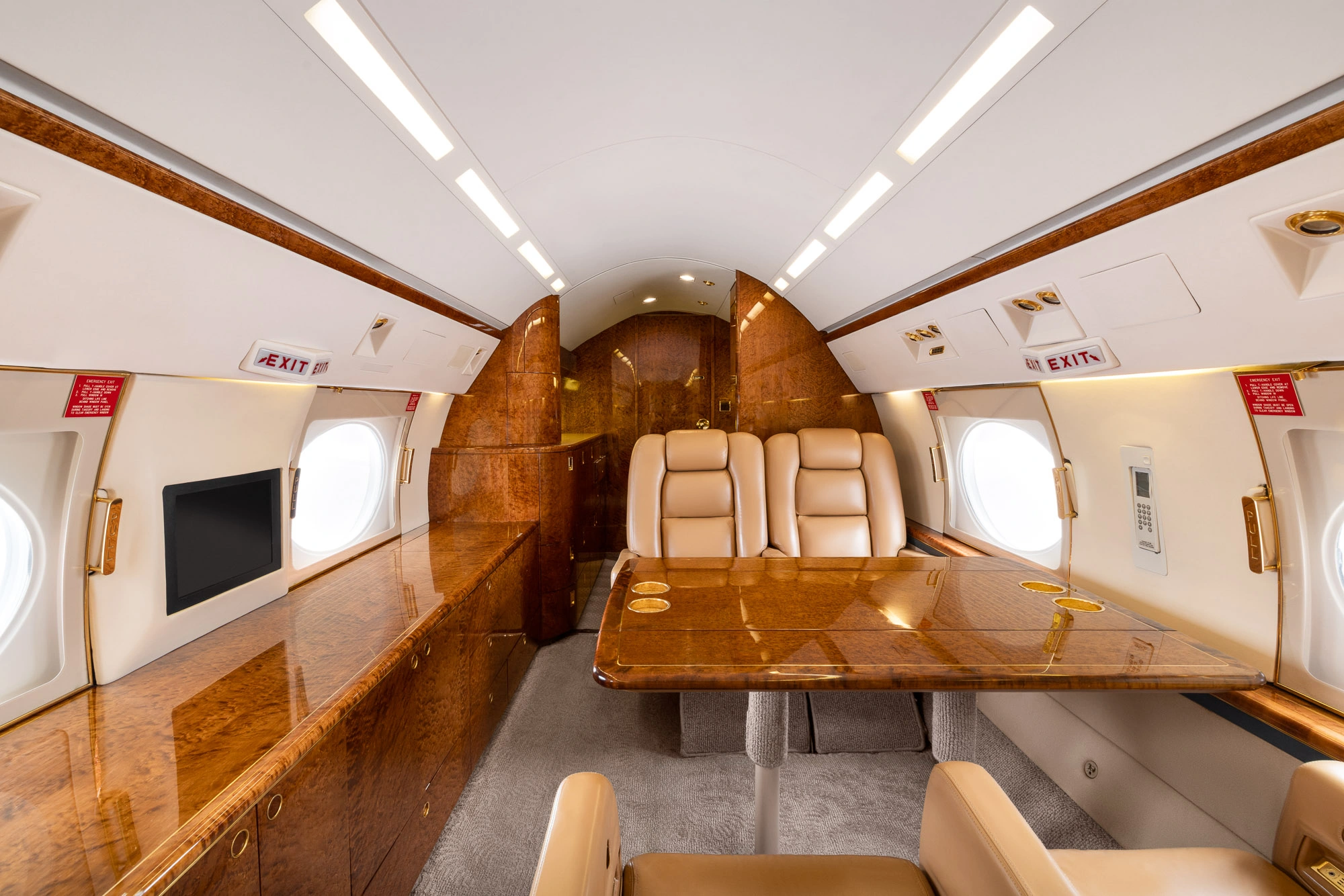
If you think you want to own, charter that specific type for a year first.
You will learn three things a spreadsheet cannot tell you. Whether the cabin fits how you actually travel. Whether the range holds up on your real routes, with your real passenger loads, in real weather. And whether you fly enough to justify the whole apparatus.
A year of chartering a midsize at 100 hours runs somewhere near $600,000 to $800,000, assuming the quotes are honest about what is included. Buying that midsize and operating it for a year costs several million and locks you into an asset you cannot exit in a week. If the answer turns out to be no, one of those is a data point and the other is an expensive lesson.
Most people who arrive convinced they want to buy find that charter already gives them the part they actually wanted. Schedule control, no terminal, airports closer to where they are going.
Four steps, in this order.
If ownership still holds up after all four, buy. Price it to the real market and verify the history under the paint. If it does not hold up, charter without guilt and keep the difference.
The one decision worth avoiding is the one made by someone whose commission depends on your signature.
Figures are 2026 industry ranges and vary significantly by aircraft type, location, and utilization. Nothing here is tax or financial advice.
Not sure which side of the line you are on? We will model charter, fractional, and whole ownership against your actual flight history. If the answer is keep chartering, that is what we will tell you.